Sep 11, 2011
Fossil corals: Paleontological Museum Elche (MUPE)
For two days I will be in Elche, Murcia (also visiting the Paleontological Museum). I am posting a short movie taken in this museum.


Sep 9, 2011
Fossil corals: Fossil hunting day
What a DAY!!!
Fossils, corals, corals,corals, some Ostreidae, gasteropod Conus (yes, just one), CORAL , this:
 just rinsed with water !
and so on, so on ... I'm to tired (but happy).
Tomorrow, some of the fossil corals will be displayed.

and so on, so on ... I'm to tired (but happy).
Tomorrow, some of the fossil corals will be displayed.
Sep 8, 2011
Fossil corals: MUPE, ELCHE, Spain (3)
The next MUPE' s displays on my Fossil corals blog, will be from Mesozoic Era ( Triassic , Jurassic , Cretaceous ).
From Triassic
Ammonite : Ceratites compressus

Bivalves : Plagiostoma striatum and Hoernesia socialis

Crinoid : Encrinus Liliiformis

From Jurasic
A Diapsid Theropod

a Pterodactylus antiquus

Ammonites : Dactylioceras athleticum

Paulovia paulovi :

Perisphinctes sp

Lytoceras sp (from Murcia) and Pleuroceras solare

From Cretaceous Era
Hoplites interruptus :

Crioceras duvali

Some fossil corals :
Cunnolites undulata

Cunnolites elipticus

and some molluscs :
Glauconia lujani, Toucasia, Gymnentome pizcuetai, Otostoma sp

(to be continued)
From Triassic
Ammonite : Ceratites compressus

Bivalves : Plagiostoma striatum and Hoernesia socialis
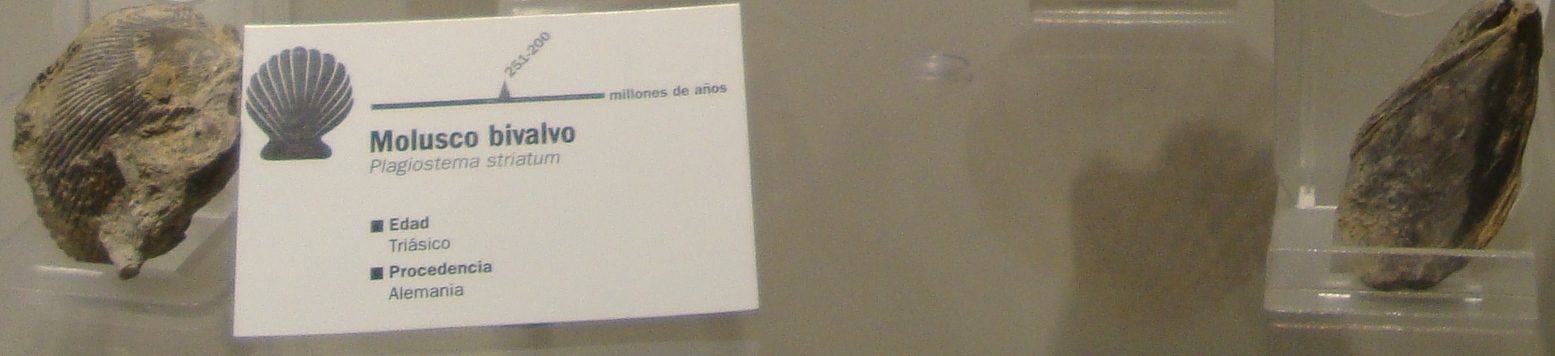
Crinoid : Encrinus Liliiformis

From Jurasic
A Diapsid Theropod

a Pterodactylus antiquus

Ammonites : Dactylioceras athleticum

Paulovia paulovi :

Perisphinctes sp

Lytoceras sp (from Murcia) and Pleuroceras solare

From Cretaceous Era
Hoplites interruptus :

Crioceras duvali

Some fossil corals :
Cunnolites undulata

Cunnolites elipticus

and some molluscs :
Glauconia lujani, Toucasia, Gymnentome pizcuetai, Otostoma sp

(to be continued)
Sep 7, 2011
Fossil Corals: MUPE (2)
If yesterday you have seen what the Ediacara fossils look like, today you are about to meet other organisms that, for millions of years, inhabited the planet.
MUPE (the Museum of Paleontology , Elche ) offers you an amazing experience, the adventure of traveling back in time as far as the most remote limits of the Earth' s origins.
The next displays are the representatives fossils from Paleozoic Era (Cambrian, Ordovician, Silurian, Devonian, Carboniferous, Permian) :

Some Trilobites from Cambrian (Paradoxides sp. , Peronopsis interstricta, Solenopleuropsis,...)
from Ordovician :

Flexicalymene sp. , Colcoporyphe sp. , Diacalymene sp. ,
Asaphus kowalewskii

From Silurian :
Graptolites : Spirograptus spiralis , Monograptus priodon ,

Arthropod : Eurypterus podolicus,

From Devonian :
Brachiopods : Spirifer bouchardi

Euryspirifer pellicoi :

Atrypa petasa

Trilobites :
Metacanthina sp., Paciphacops , Crotalocephalus

Fossil corals:
Synaptophyllum

Calceola sandalina

Pachyfavosites sp.

Acervularia ananas :

From Carboniferous
Annularia stellata

Pecopteris arborescens , Asterophyllites equisetiformis

Callipteridium gigas, Alethopteris sp.

From Permian
Mesosaurus sp.

(to be continued)
MUPE (the Museum of Paleontology , Elche ) offers you an amazing experience, the adventure of traveling back in time as far as the most remote limits of the Earth' s origins.
The next displays are the representatives fossils from Paleozoic Era (Cambrian, Ordovician, Silurian, Devonian, Carboniferous, Permian) :

Some Trilobites from Cambrian (Paradoxides sp. , Peronopsis interstricta, Solenopleuropsis,...)
from Ordovician :

Flexicalymene sp. , Colcoporyphe sp. , Diacalymene sp. ,
Asaphus kowalewskii

From Silurian :
Graptolites : Spirograptus spiralis , Monograptus priodon ,


Arthropod : Eurypterus podolicus,

From Devonian :
Brachiopods : Spirifer bouchardi

Euryspirifer pellicoi :

Atrypa petasa

Trilobites :
Metacanthina sp., Paciphacops , Crotalocephalus

Fossil corals:
Synaptophyllum

Calceola sandalina

Pachyfavosites sp.

Acervularia ananas :

From Carboniferous
Annularia stellata

Pecopteris arborescens , Asterophyllites equisetiformis

Callipteridium gigas, Alethopteris sp.

From Permian
Mesosaurus sp.

(to be continued)
Sep 6, 2011
Fossil Corals: MUPE, ELCHE,SPAIN
MUPE the Paleontological Museum of ELCHE, Spain, was created for encouraging the interest in the PALEONTOLOGY as well as preserving the heritage of the Alicante province.
Proof of all this is the wide range of fossils exhibited in its rooms.
1. Begining with Ediacaran-630 million years ago (The Ediacara Hills, Australia, gave a name to the entire "Ediacara biota" of the late Precambrian. )


The stylized fossils from the Ediacara Hills, do look, more or less, like this :


The first one is named Arkarua, and is believed to be the oldest echinoderm;
the second, Tribrachidium heraldicum- its affinities are still mysterious;
the third, Spriggina, is a possible relative of the arthropods
2. PALEOZOIC-542million years ago

The Palaeozoic Era lasted 291 million years.
For much time life took place in the sea. The climate was warm and wet, although it became more arid at the end of the period.
During the Paleozoic, the lands that had emerged formed large islands, which came togethere and finally formed a great supercontinent called PANGAEA (Pangea)
The first insects, amphibians and reptiles appeared.
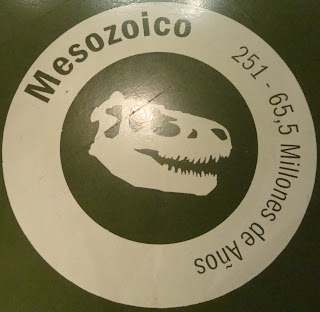
3. MESOZOIC-251 million years ago
It is divided into three periods: Triassic, Jurassic and Cretaceous.
Pangea fractured and the continental plates followed their independent drifts, coming close to their current location.
The first mammals appeared on the Earth' s surface.
This was also the era of large reptiles and Dinosaurs
4. CENOZOIC- 65,5 million years ago.
It is divided into three periods : the Paleogene, Neogene and Quaternary.
In this era the Continents reached the current positions.
This is the era of a great expansion of the mammals.

(to be continued)
Proof of all this is the wide range of fossils exhibited in its rooms.
1. Begining with Ediacaran-630 million years ago (The Ediacara Hills, Australia, gave a name to the entire "Ediacara biota" of the late Precambrian. )


The stylized fossils from the Ediacara Hills, do look, more or less, like this :


The first one is named Arkarua, and is believed to be the oldest echinoderm;
the second, Tribrachidium heraldicum- its affinities are still mysterious;
the third, Spriggina, is a possible relative of the arthropods
2. PALEOZOIC-542million years ago

The Palaeozoic Era lasted 291 million years.
For much time life took place in the sea. The climate was warm and wet, although it became more arid at the end of the period.
During the Paleozoic, the lands that had emerged formed large islands, which came togethere and finally formed a great supercontinent called PANGAEA (Pangea)
The first insects, amphibians and reptiles appeared.
3. MESOZOIC-251 million years ago
It is divided into three periods: Triassic, Jurassic and Cretaceous.
Pangea fractured and the continental plates followed their independent drifts, coming close to their current location.
The first mammals appeared on the Earth' s surface.
This was also the era of large reptiles and Dinosaurs

4. CENOZOIC- 65,5 million years ago.
It is divided into three periods : the Paleogene, Neogene and Quaternary.
In this era the Continents reached the current positions.
This is the era of a great expansion of the mammals.

(to be continued)
Subscribe to:
Posts (Atom)